
Forex dealers said besides dollar's gains against other currencies, fresh demand for the American unit from importers and a weak opening in the domestic equity market put pressure on the rupee.

Facebook's parent company Meta announced on Tuesday it will fire another 10,000 people, implementing a second round of jobs cuts after it slashed 11,000 positions in November last year, to improve its financial performance in a "difficult environment". Meta founder Mark Zuckerberg said in a post that overall "we expect to reduce our team size by around 10,000 people and to close around 5,000 additional open roles that we haven't yet hired." The company has said that in its "Year of Efficiency", the company aims to make itself "a better technology company and to improve our financial performance in a difficult environment so we can execute our long-term vision."

The California walnuts shipped from the US to India have seen a sharp uptick with imports more than doubling from September to November against the same period last year. This comes after New Delhi removed its retaliatory customs tariffs on the key dry fruit. Two days ahead of US President Joe Biden's visit to New Delhi to attend the G20 Summit on September 9-10, India dropped additional customs duties on about half a dozen US goods that were imposed in 2019 in response to America raising tariffs on certain steel and aluminum products coming from India.

Vietnam-based electric vehicle maker VinFast, a rival of Tesla in the global market, has set foot in India and began work on building its Rs 16,000 crore EV manufacturing facility at Thoothukudi in Tamil Nadu. The company has already sought a reduction in import duties on its cars for about two years until customers get familiar with the brand and its unit in the state. The global major kicked off the construction of the first phase of its integrated EV hub, which may see Rs 4,000 crore of investment initially and will create more than 10,000 jobs.

'This has become a necessity now to kick start the investment cycle'

'While most companies were bullish before the second wave of double-digit sales growth in FY22, that may not be the case now.'

'When 99.9 per cent of the most vulnerable are above 65, I see no logic in this sweeping lockdown in a country in which 94 per cent are below 65.' 'The most sensible thing to do would be to recalibrate this unnecessary lockdown as soon as possible.'

The growth in six core industries - crude oil, petroleum refinery products, coal, electricity, cement and finished carbon steel - contracted also for the April-September period to 3.9 per cent from 6.9 per cent in the first half of the previous year. The infrastructure industries have a weight of 26.7 per cent in the overall index of industrial production.
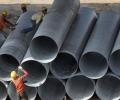
Industrial metals (ferrous and non-ferrous) suffered great volatility once the Ukraine War began in February 2022. First, there was a sharp price rise due to fears of supply disruption, followed by weak global demand. China's weakness and rolling lockdowns have hit production and demand.

Subsequent data revisions revealed that growth had not slowed that sharply.

A lower base could be part of the explanation but not all.

'The revival of household savings and investment is the litmus test of whether we are on the road to recovery,' says Nitin Desai.
The growth of key infrastructure industries slowed down to 2.3 per cent in December 2008 from 3.2 per cent a year-ago, mainly on account of drop in output of steel and crude oil.

The new data comes a day after China and the US signed a long-awaited phase one deal, marking a ceasefire in the 18-month-long trade war which saw the world's two largest economies slap 25 per cent tariffs on about half a trillion-dollar worth of each other's exports. The world's second-largest economy grew by 6.1 per cent last year, its worst performance since 1990, but it remained above the psychologically important mark of six per cent, according to the National Bureau of Statistics (NBS).
Indian economic growth has slowed down drastically to 5.3 per cent in the third quarter of fiscal year 2008-09 as against 8.9 per cent in the same period a year ago.

There is uncertainty in most investors' minds as to whether China is transitioning to a new growth model or simply collapsing.
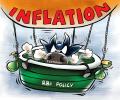
Analysts say RBI will cut rates because the liquidity crunch that began this time last year is still hurting the economy and also with an eye on the August industrial production numbers, which showed a contraction by 1.1 per cent -- the steepest in seven long years.

While salary growth may range from a marginally positive to stagnant or even negative, the increment for some of the "super-specialised" profiles can go beyond 15%.
Infrastructure growth plummeted to 0.5 per cent during July 2005 compared to 11.1 per cent in the same month last fiscal, owing to a sharp fall in production of coal, steel, power and crude oil.

'Investment creates capacity and reduces inflation. Income, employment, and savings rise.'
A sample of 1,248 companies saw net sales rise a whopping 39 per cent in the quarter ended June 2008 over that a year ago, as compared to 28 per cent in the quarter ending March 2008 and 16 per cent for the quarter ending December 2007.

Industrial production in November was expected to grow 1.0 per cent from a year earlier, after shrinking 1.8 per cent in October, according to the median consensus of 20 economists.

The BSA Gold Star is launched....Ola Enters e-motorbikes Biz... Bajaj, TVS To Enter e2Ws Market...

The oil industry experienced three upheavals between 1973 and 1991, which seem to be etched in the memory of the industry's decision makers. Naturally, at the sign of a new crisis, the decision makers like to dip into those tumultuous decades to find ways to deal with the new shock, in addition, of course, to expert reports and forecasts. So, the industry bigwigs turned the pages of history to get a peek into the future of oil price movements after Russia invaded Ukraine in 2022, Israel attacked Gaza in 2023, Iran-linked Houthi rebels pounded tankers crossing the Red Sea in support of Palestine the same year, and Iran rained missiles on Israel in 2024.

Global markets trends, inflation, release of industrial output data and quarterly earnings will dictate movement of the equity benchmarks this week, analysts said, adding that volatility might continue amid slew of announcements of macroeconomic data at the global level too. Moreover, foreign fund movement, crude oil prices and trend in rupee would also act as major drivers for the equity market, they added. "The direction of global equity markets along with movement in dollar index and crude oil prices will continue to dominate while inflation numbers of the USA on May 11 and inflation and IIP numbers of India on May 12 will also cause volatility in the market," said Santosh Meena, head of research, Swastika Investmart Ltd.

'We do not see people getting reduced, but because of automation, we will do more work.'

Year after year, the number of yoga practitioners participating in the official and unofficial events on International Yoga Day in different cities is growing, especially the young people, officials say.

Shares of ICICI Bank may outperform those of HDFC Bank in the near-term, analysts said recently, after the Sandeep Bakhshi-led private sector lender reported a strong set of numbers for the July to September quarter (Q2) of financial year 2023-24 (FY24). The result, they said, reiterated that ICICI Bank is maintaining a sustainable and prudent growth led by tech-driven initiatives as against HDFC Bank, which is facing merger related challenges. According to analysts at Prabhudas Lilladher, ICICI Bank is valued at par with HDFC Bank at 2.2x/1.9x on FY25/26E core adjusted book value (ABV) basis.

Issues like high insurance cost and the announced price hike effective January could also weigh on sales in 2019. The only bright spot is the softening seen in fuel prices over the past month.

The BJP still does not have a majority in Upper House of Parliament, the Rajya Sabha, and this will pose hurdles to the party's legislative reform agenda

While activity in the highway segment has been slow, the bid pipeline saw recovery in January 2024, and awards are expected to improve in Q4FY24. The national highway (NH) bid pipeline has recovered from a low of Rs 15,900 crore in December 2023 to Rs 68,400 crore at present. The NHAI's pipeline stands at Rs 66,100 crore, with hybrid annuity model (HAM), build operate transfer (BOT) and engineering procurement and construction (EPC) projects accounting for 60 per cent, 29 per cent and 13 per cent share, respectively.

'I think some of us, like Mukesh Ambani, myself and those of us who head industrial units, ought to really focus on what we can really do to make the world a safer place, maybe 50 or 100 years from now.' 'For instance, how can we deal with climate change and global warming, right now?' 'The effects of it may not be felt now; in fact, we may pay a price for it today, but it will help the generations to follow.'

'We expect the bull-market phase to still persist, but now led by large-caps which offer better valuation and benefit from FII inflows.'
'We expect continued pressure on midcaps, but any sharp correction looks unlikely from here on.'

Industry has been going through a phase of high interest rates, declining demand and insufficient working capital.

While she primed up spending on infrastructure to create jobs and boost economic activity, Sitharaman did not tinker with income tax slabs or tax rates. Her Budget for the fiscal year beginning April 2022 proposed a massive 35 per cent jump in capital expenditure to Rs 7.5 lakh crore, coupled with rationalisation of customs duty, an extension of time for setting up new manufacturing companies and plans for starting a digital currency and tax crypto assets.
Majority of the experts expect a 25 basis point reduction.

A moderate recovery in Indian factories, exports and investments were probably the main drivers for an increase in overall growth in the quarter through March.
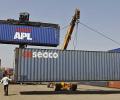
With exporters' claim for over five months still pending, liquidity has been wiped out and the process of finalising new contracts has been held up.

Growth in CVs were primarily aided by unscathed demand for LCVs.
